Compare streetwear tops for a garment-washed collection. Start with short-sleeve T-shirts to establish fit and fade, or choose a pullover hoodie when hood volume, rib recovery and pocket shape need separate approval. Develop your range with a custom streetwear tops manufacturer. A men's tops supplier can use your size chart to review body and sleeve proportions across the proposed range. When assessing a custom tops factory, compare its sample against the agreed size chart and finish.
TEE-001 is a plain charcoal crew neck tee with cloudy gray mottling, dropped shoulders and broad short sleeves. Lighter collar, sleeve and hem edges give the surface definition. Develop the relaxed silhouette through body width, length and sleeve opening, then review shade and dimensions on a finished sample. Original artwork and private label details can be assessed on the proposed cloth. Material composition, GSM, treatment route and order terms require a project-specific specification and quotation.
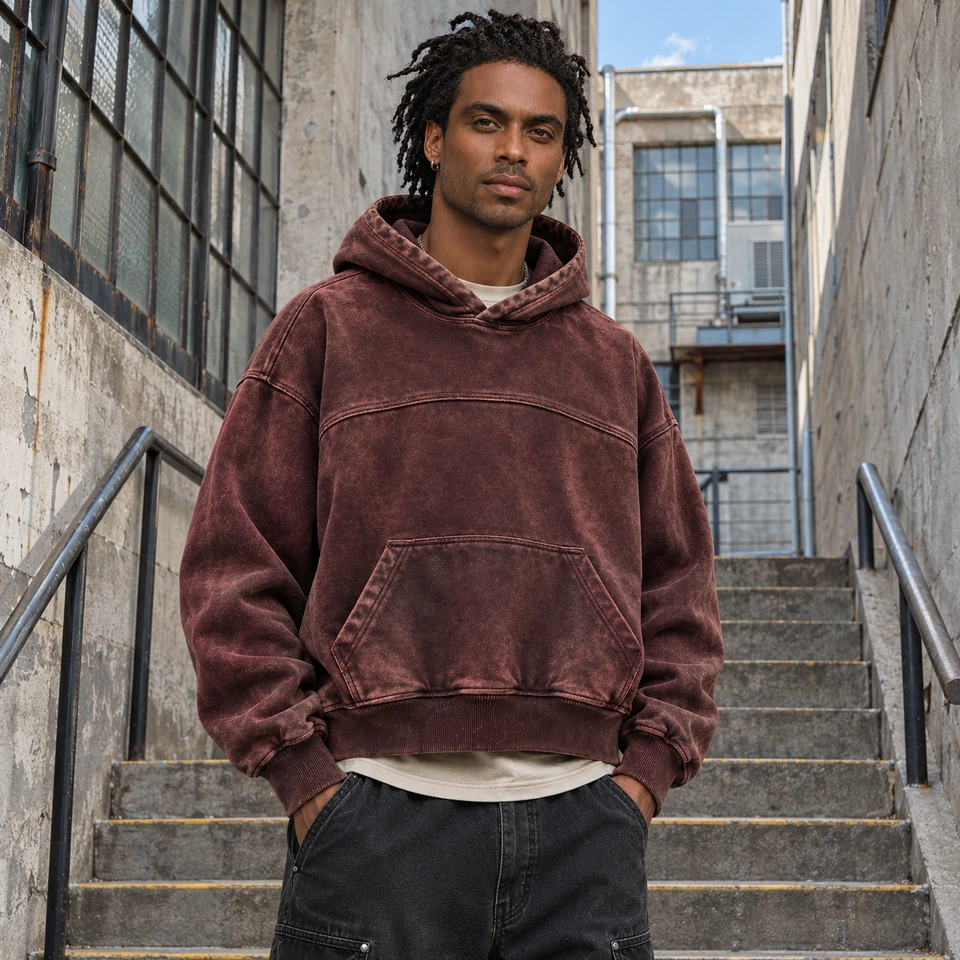
Model HD-001 · Burgundy washed pullover · Development reference
Develop a burgundy streetwear pullover around its roomy body, curved front panel and faded seam edges. The plain chest keeps the wine-red shade and panel shape visible, while the hood, kangaroo pocket and ribbed cuffs and hem define the silhouette. For a private label brief, specify body width and length, hood volume, pocket proportions, shade contrast, original artwork and label placement. Send your size chart, fabric preference and quantities by size and color for a sampling review. Confirm composition, fabric weight, finishing method, availability and quotation against the selected material and approved sample.
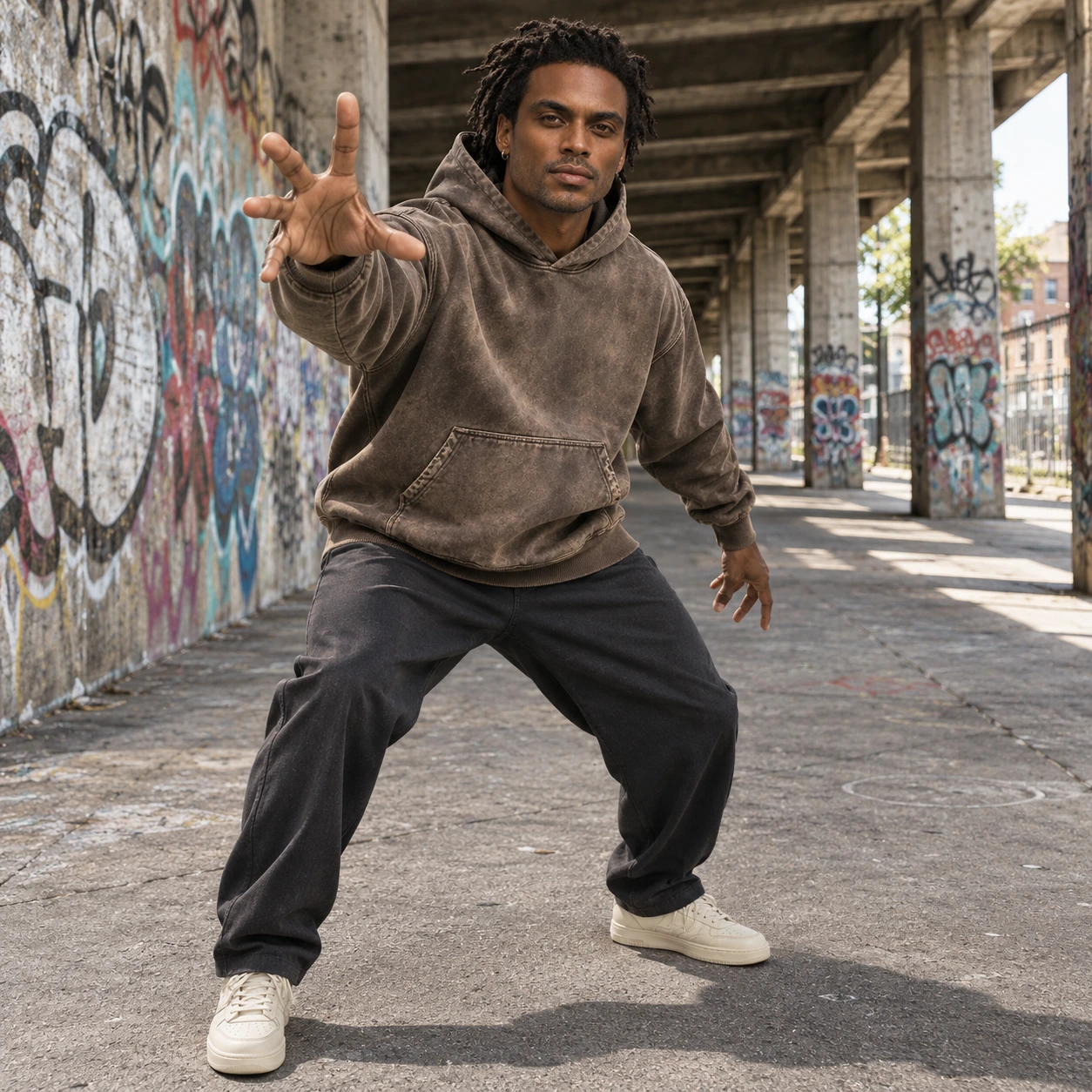
HD-002 combines a warm taupe ground with cloudy light and dark variation across a plain pullover shape. Dropped shoulders, a roomy body and a kangaroo pocket give the surface room to read, while ribbed cuffs and hem gather the volume at its edges. The hood opening has no visible drawcord in the supplied front reference. The collection opportunity lies in balancing quiet construction with an expressive surface. Unlike the curved-front-panel HD-001, this reference has an uninterrupted chest above the pocket. Body length, hood depth and the scale of the mottling can be discussed together, with proposed cloth and finishing choices evaluated on a complete sample.
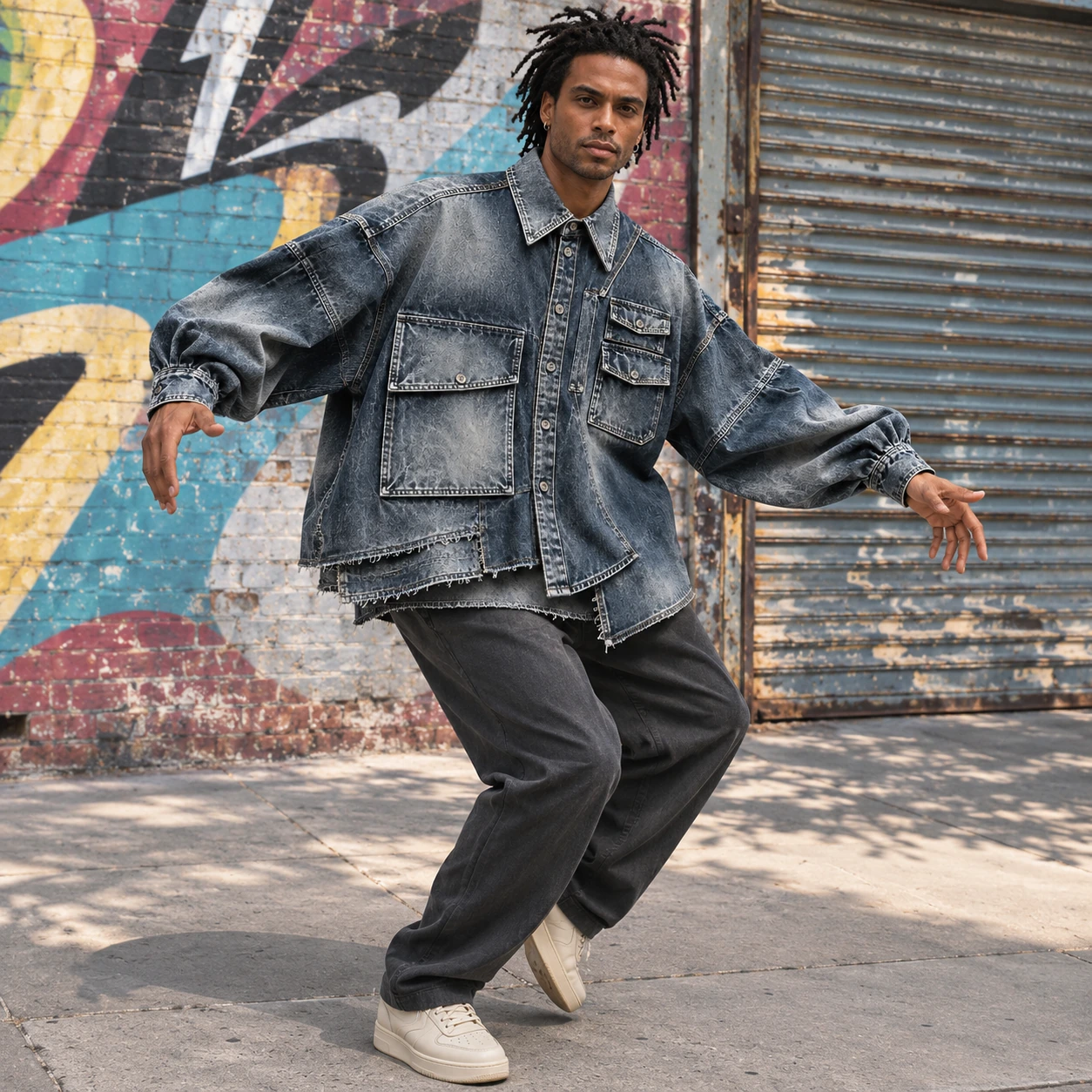
JK-001 uses pocket placement and an irregular lower edge to give a plain button-front overshirt its identity. The faded blue reference shows a pointed collar, broad dropped sleeves, one large flap pocket on one side and stacked flap pockets on the other. A vertical front edge and layered hem reinforce the deliberately uneven construction. This is a useful starting point for a collection built around visible utility details rather than printed graphics. The broad body can be considered as a layering piece, with pocket scale, sleeve volume and finished length developed together. Material weight and the exact finishing route still require a cloth and sample review.
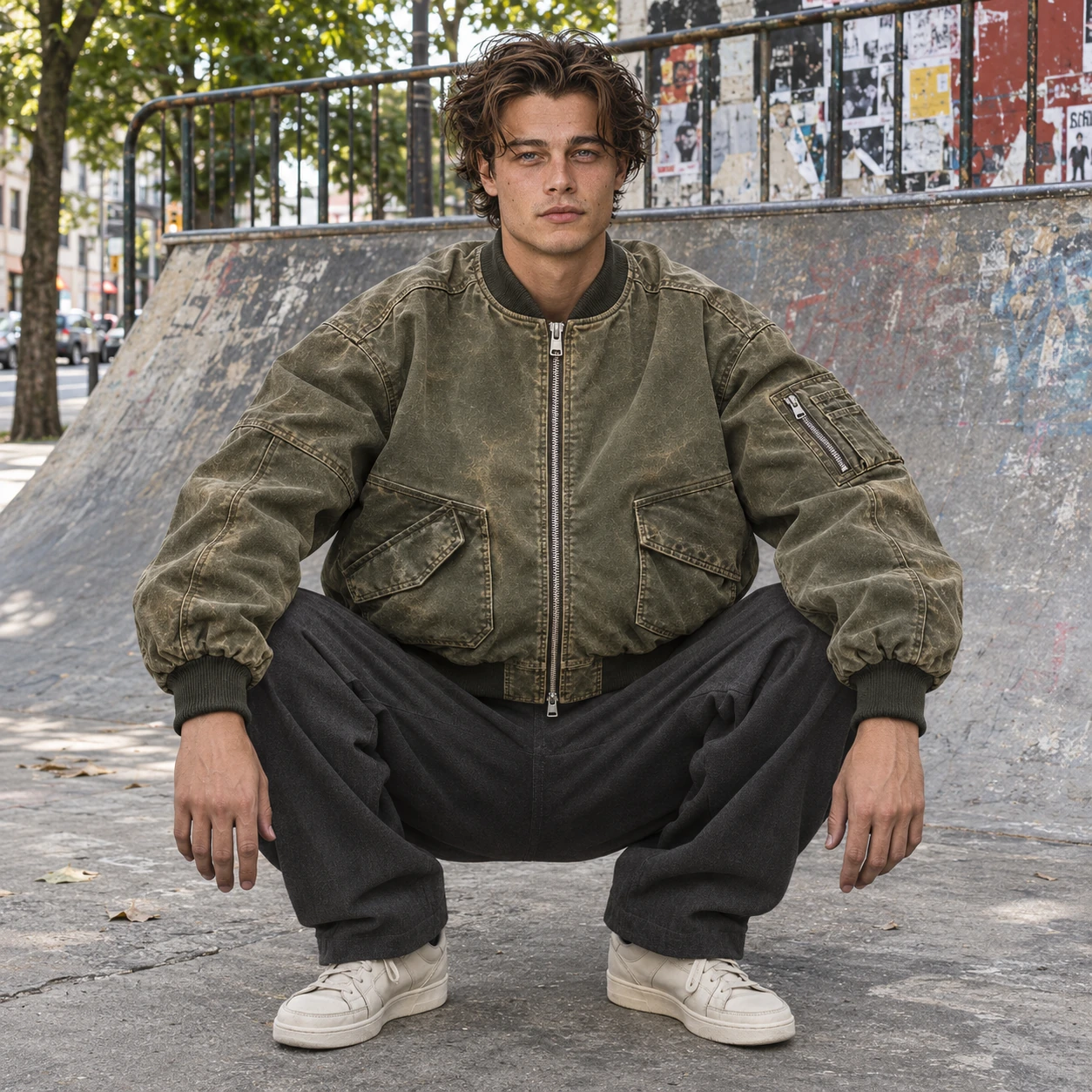
JK-002 combines a washed olive shell with darker ribbing and a central metal zipper. The front reference shows a low rib collar, broad long sleeves and two low angled flap pockets. A separate zipped utility pocket on the upper left sleeve adds a distinct functional detail without a large front graphic. The design opportunity is the relationship between shell volume and gathered edges. Body length, sleeve fullness and rib tension determine the compact bomber silhouette, while pocket angle and zipper alignment organize the front. These choices should be assessed with the jacket closed, alongside the intended base layer and the proposed shell material.