Browse references for custom garment-washed apparel. Start with T-shirts, denim pants or hoodies and compare silhouette, wash placement and decoration before developing an OEM sample.
TEE-001 is a plain charcoal crew neck tee with cloudy gray mottling, dropped shoulders and broad short sleeves. Lighter collar, sleeve and hem edges give the surface definition. Develop the relaxed silhouette through body width, length and sleeve opening, then review shade and dimensions on a finished sample. Original artwork and private label details can be assessed on the proposed cloth. Material composition, GSM, treatment route and order terms require a project-specific specification and quotation.
Model PT-001 · Faded panel wide-leg jeans · Development reference
PT-001 combines a broad denim leg with pale front-thigh fading and horizontal panel seams around the knee. The supplied front reference shows a buttoned waistband, belt loops and curved hip pockets. A large side patch pocket and small loop on the wearer's left introduce an asymmetric utility detail above the panelled lower leg. The development opportunity is to balance a wide silhouette with specific landmarks. The knee panels, side pocket and pale areas should be discussed together rather than treated as unrelated details. Rise, inseam and opening determine where those features sit on the wearer, while the proposed denim and finish establish their final visual contrast.
Model HD-001 · Burgundy washed pullover · Development reference
Develop a burgundy streetwear pullover around its roomy body, curved front panel and faded seam edges. The plain chest keeps the wine-red shade and panel shape visible, while the hood, kangaroo pocket and ribbed cuffs and hem define the silhouette. For a private label brief, specify body width and length, hood volume, pocket proportions, shade contrast, original artwork and label placement. Send your size chart, fabric preference and quantities by size and color for a sampling review. Confirm composition, fabric weight, finishing method, availability and quotation against the selected material and approved sample.
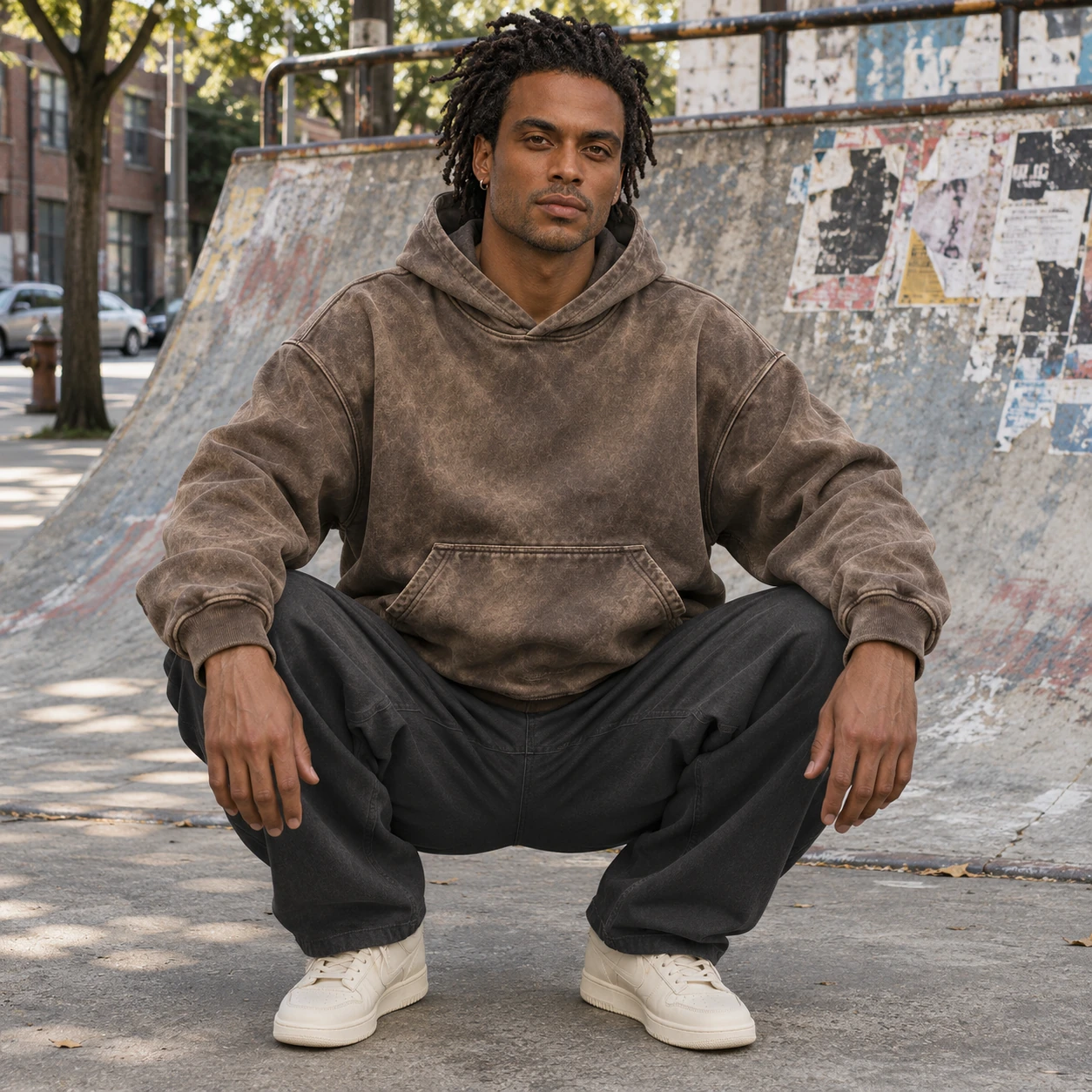
HD-002 combines a warm taupe ground with cloudy light and dark variation across a plain pullover shape. Dropped shoulders, a roomy body and a kangaroo pocket give the surface room to read, while ribbed cuffs and hem gather the volume at its edges. The hood opening has no visible drawcord in the supplied front reference. The collection opportunity lies in balancing quiet construction with an expressive surface. Unlike the curved-front-panel HD-001, this reference has an uninterrupted chest above the pocket. Body length, hood depth and the scale of the mottling can be discussed together, with proposed cloth and finishing choices evaluated on a complete sample.
JK-001 uses pocket placement and an irregular lower edge to give a plain button-front overshirt its identity. The faded blue reference shows a pointed collar, broad dropped sleeves, one large flap pocket on one side and stacked flap pockets on the other. A vertical front edge and layered hem reinforce the deliberately uneven construction. This is a useful starting point for a collection built around visible utility details rather than printed graphics. The broad body can be considered as a layering piece, with pocket scale, sleeve volume and finished length developed together. Material weight and the exact finishing route still require a cloth and sample review.
JK-002 combines a washed olive shell with darker ribbing and a central metal zipper. The front reference shows a low rib collar, broad long sleeves and two low angled flap pockets. A separate zipped utility pocket on the upper left sleeve adds a distinct functional detail without a large front graphic. The design opportunity is the relationship between shell volume and gathered edges. Body length, sleeve fullness and rib tension determine the compact bomber silhouette, while pocket angle and zipper alignment organize the front. These choices should be assessed with the jacket closed, alongside the intended base layer and the proposed shell material.
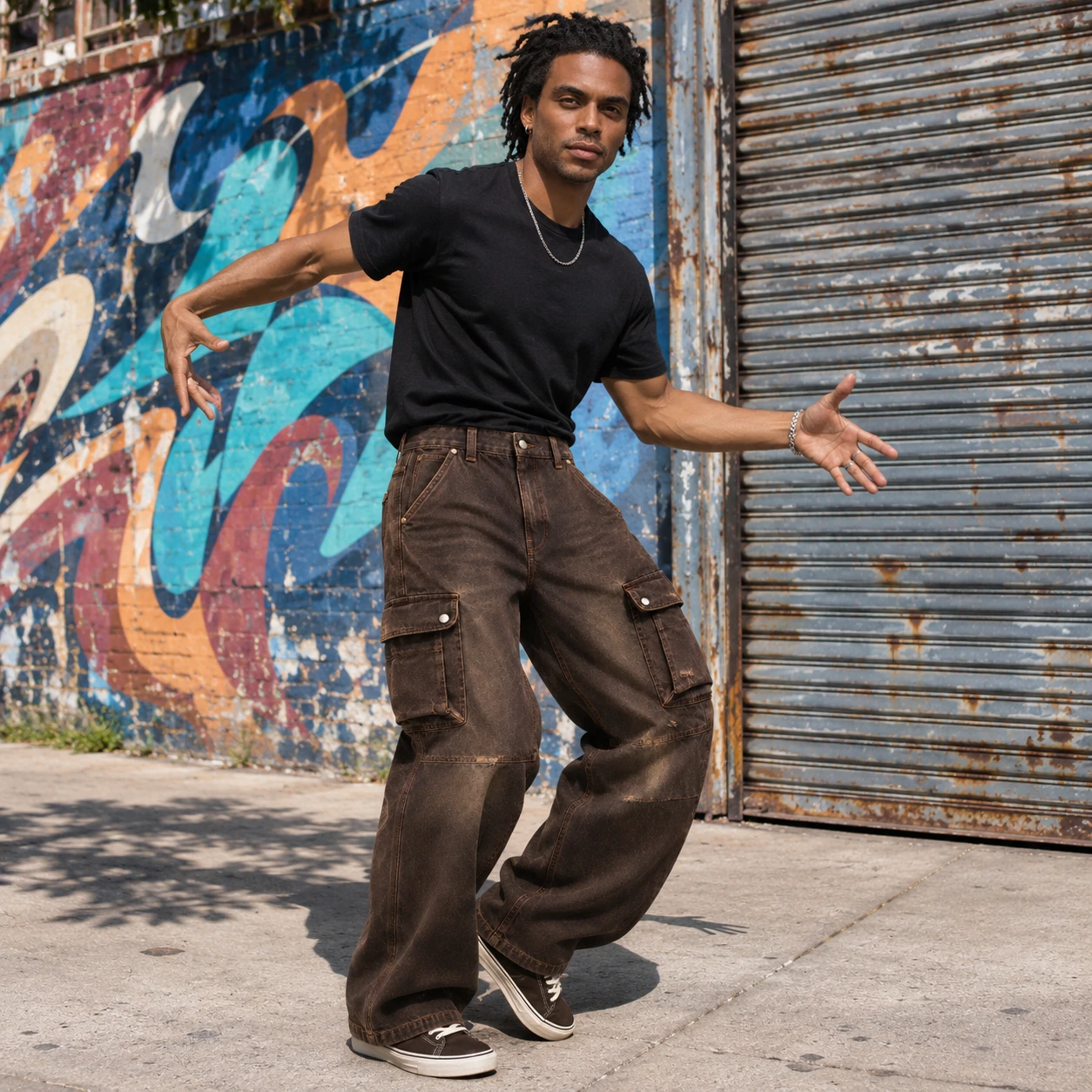
PT-002 uses a dark brown washed surface and large thigh pockets to define a roomy utility trouser. The original wearing reference shows belt loops, angled hip entries, flap cargo pockets with visible metal fasteners and long broad legs. Lighter seam and edge contrast gives the brown surface depth without a printed graphic. The collection decision sits in the relationship between pocket volume and leg width. A larger cargo pocket can change the side profile even when the waist and hem measurements stay constant. Rise, thigh ease, pocket position and finished length should be reviewed on the same garment, with a proposed cloth and finish selected through actual material submissions.
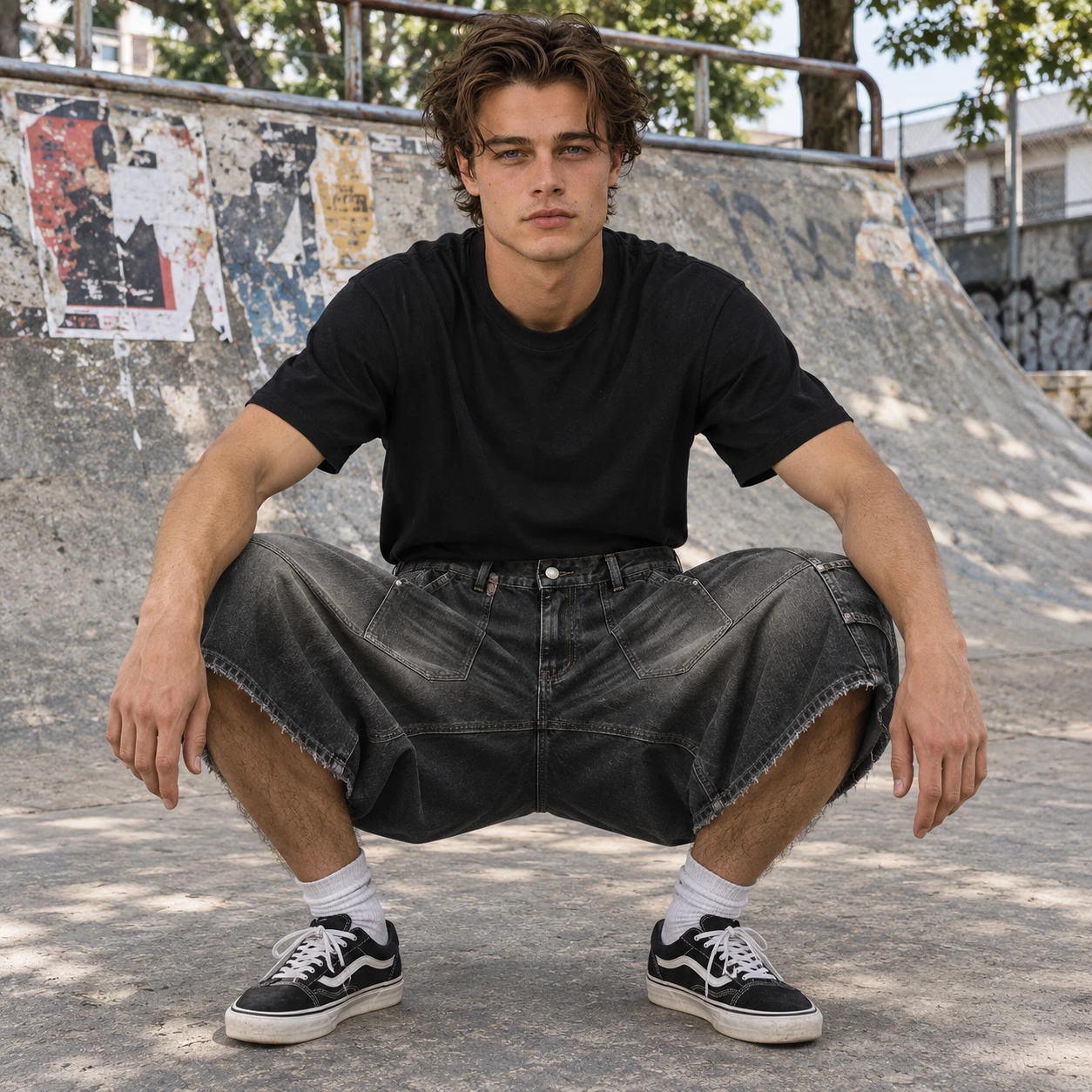
SH-001 combines a long wide-leg short with a washed charcoal surface and pale fading down the front. The reference shows belt loops, a buttoned fly area and large angular front patch pockets. A side pocket and small loop add a utility accent, while a low horizontal seam and lightly frayed hem define the broad lower opening. The key collection decision is where this extended short should finish on the wearer. Rise, inseam and opening shape work together to establish the long jorts proportion. Review those measurements alongside pocket scale and fade placement so the visible construction remains balanced rather than treating the short as a shortened version of an unrelated jean.
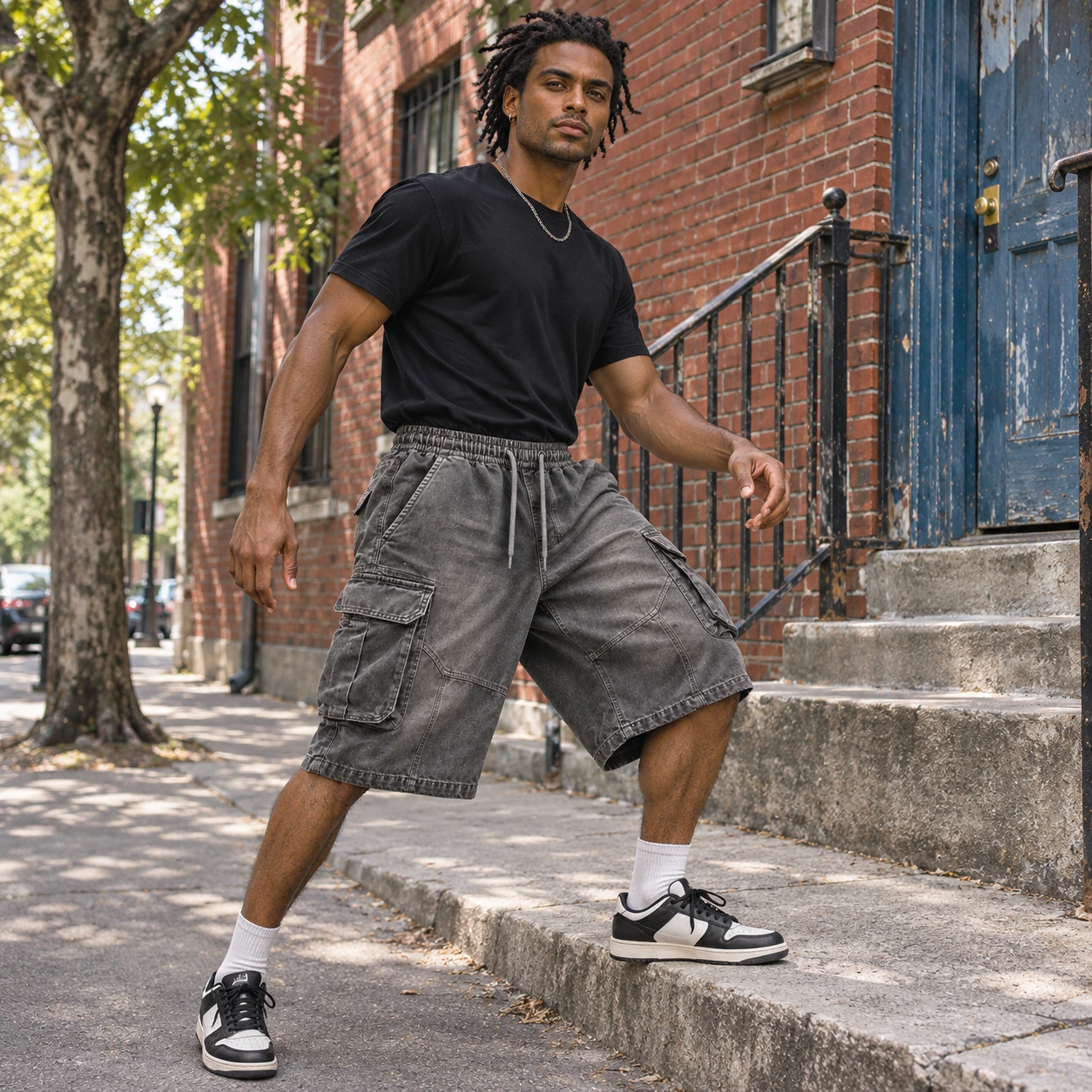
SH-002 combines a gathered elastic waist with round drawcords, broad short legs and prominent side cargo pockets. The supplied front reference shows angled hip entries and sweeping lower panel seams. Its mottled gray surface keeps the waistband, flaps and curved stitching within a restrained neutral color story. The development opportunity is to balance easy waist adjustment with purposeful pocket volume. Relaxed and stretched waist measurements, drawcord length, rise and opening should be reviewed together. The curved lower seams also need to sit coherently beside the cargo pockets, so pattern and shade decisions should be assessed on the same finished sample.
Share your reference image, target measurements, wash direction and approximate order quantity so we can review your requirements.
Discuss your brief with a custom streetwear manufacturer. When comparing an OEM clothing manufacturer, review the proposed cloth, fit and wash on a finished sample.
For hooded styles, ask a custom hoodie manufacturer about the chosen pocket and hood dimensions. For custom streetwear clothing, compare product references, measurements and finishing directions with your development team.
When evaluating streetwear apparel manufacturers, share the same brief with each streetwear manufacturer so that quotes address the same construction. Brands looking to customize street wear or develop custom street wear can use these pages to define their first sample.
Compare streetwear manufacturers on the proposed sample and written quotation.